
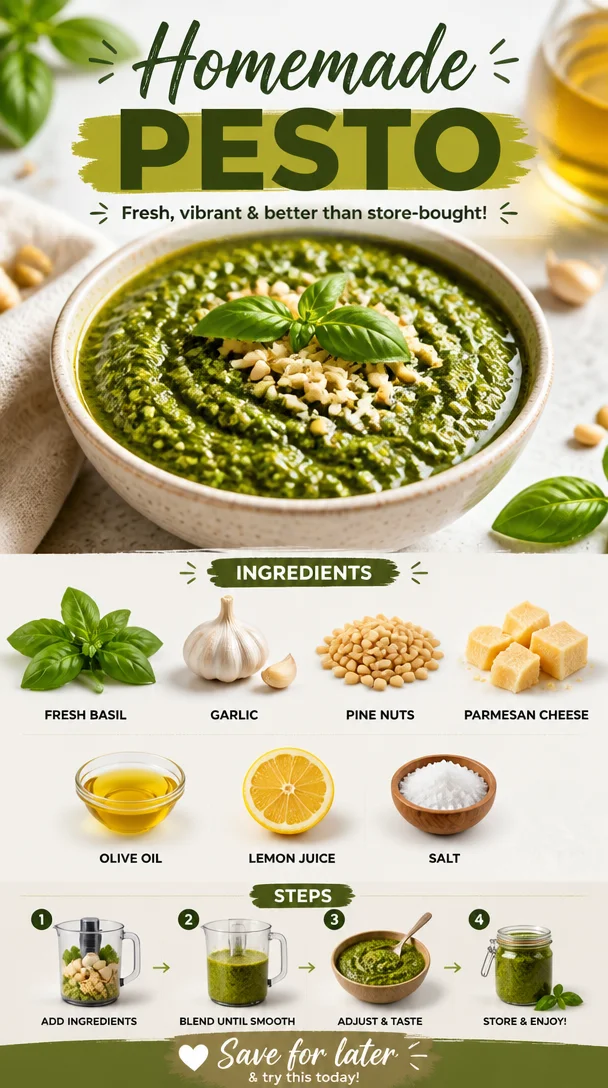
The Magic of Homemade Pesto: A Fresh Take on a Classic
There’s something so enchanting about the vibrant green hue of homemade pesto. The moment you open a jar, or better yet, a freshly made batch, the earthy aroma of basil wafts through the air, instantly transporting you to sun-drenched Italian streets. Imagine tossing warm pasta with a swirl of glossy, herbal goodness, or spreading it onto crusty bread while summer sunshine beams through your kitchen window. That, my friends, is the magic of pesto.
Pesto originates from the Italian region of Liguria, where they perfected the art of blending fresh basil, garlic, and nuts into a luscious paste. While traditional recipes may lean heavily on certain ingredients, what’s beautiful about homemade pesto is its versatility. It’s a canvas for your culinary creativity! Whether you’re a self-proclaimed foodie, a busy parent, or a kitchen newbie, making your own pesto is not just rewarding; it’s downright fun.
Today, we’re diving deep into the world of homemade pesto. With just a handful of ingredients, you’ll unlock a world of flavors that can elevate countless dishes. So grab your food processor, and let’s create some kitchen magic.
A Flavorful Memory: The First Batch
As a child, I had a little herb garden just outside my kitchen door. It was a patch of pure joy. I remember one summer day, the sun shining brightly, when my grandmother decided it was the perfect time to make pesto. Armed with a food processor and an eagerness that only a child could muster, I helped her gather the freshest basil leaves. As she guided me through the steps—crushing garlic cloves, toasting those pine nuts—we chattered about everything and nothing, our laughter mixing with the whir of the processor.
That first batch of pesto was almost magical. The vibrant green paste brought our family together, tossed with spaghetti and served with some crusty bread. I can still remember the taste—a burst of fresh basil, a hint of nuttiness, and a salty kiss from the Parmesan—each bite was a reminder of that special day in the kitchen. From then on, whenever I make pesto, I’m reminded of that warmth and love, which is why I’m so excited to share this recipe with you today!
Ingredients You’ll Need
To create this fresh homemade pesto, here’s a list of simple yet powerful ingredients you’ll need:
-
Fresh Basil: The star of the show! Fresh basil gives pesto its beautiful green color and aromatic flavor. If you can’t find basil, spinach or arugula can be great substitutes; they’ll offer a different flavor but still pack a punch.
-
Garlic: A couple of cloves will add a lovely kick. For a milder flavor, you can roast the garlic before adding it to the mix — it becomes sweet and caramelized.
-
Pine Nuts: These little gems provide a creamy texture and a nutty flavor. Don’t have pine nuts? Try walnuts or sunflower seeds for a different flavor profile.
-
Parmesan Cheese: This adds richness and depth to the pesto. You can substitute it with Pecorino Romano for a sharper taste or opt for nutritional yeast for a dairy-free version.
-
Olive Oil: A good quality extra virgin olive oil is ideal, as it enhances the flavor of the pesto. For a lighter option, you can mix it with avocado oil.
-
Lemon Juice: A splash of lemon juice brightens the entire dish and helps to prevent the basil from browning. Fresh lemon juice is best, but bottled can work in a pinch.
-
Salt: Just a touch to enhance all those flavors! If you’re watching your salt intake, feel free to reduce or use a salt substitute.
By understanding each ingredient’s role and potential substitutes, you can personalize this pesto to suit your taste!
Step-by-Step Instructions
Now that we’ve rounded up our ingredients, let’s get into the heart of it: making that delicious homemade pesto! Follow these steps, and soon you’ll be basking in the aromatic bliss of your kitchen.
-
Gather Your Ingredients: Before you start, chop your garlic and gather your basil leaves. Removing the leaves from the stems will help in combining them smoothly later.
-
Toast the Pine Nuts (optional): If you’re looking to amp up the flavor of your pesto, consider toasting the pine nuts in a dry skillet over medium heat. Stir them frequently until they’re golden brown and fragrant. This usually takes about 5 minutes. Keep an eye on them, as they can burn quickly! Once done, let them cool while you prep the rest of your ingredients.
-
Combine Basil and Garlic: In a food processor, add your fresh basil leaves and chopped garlic. Pulse them together until they are coarsely chopped. This is where the exciting aroma will start to fill your kitchen, and the vibrant green mixture begins to take shape!
-
Add Pine Nuts: Toss in your toasted (or raw) pine nuts! Pulse to incorporate them into the basil and garlic mix. You want a nice crumbly texture at this point, which will help your pesto come together beautifully.
-
Incorporate Cheese: Now it’s time to add the freshly grated Parmesan cheese. Pulse several times until combined with the nut and herb mixture.
-
Whisk in Olive Oil: With the processor running, slowly drizzle in the olive oil. This is where the magic happens! As the oil integrates, the pesto will begin to emulsify, transforming into that smooth, creamy delight we all know and love. Make sure you scrape down the sides of the bowl a couple of times to ensure everything is evenly incorporated.
-
Finishing Touches: Once your pesto is nice and smooth, add a splash of fresh lemon juice and salt. Give it one last pulse to blend everything together. Taste your creation and adjust the seasoning as necessary; maybe you want a bit more cheese or lemon juice to balance it out!
-
Store or Serve: If you’re planning to use your pesto right away, fantastic! If not, transfer it to a jar. To preserve that vibrant green color, drizzle a thin layer of olive oil on top. Store it in the fridge for up to a week, or freeze it in ice cube trays for longer storage.
Serving Suggestions
Pesto is incredibly versatile! Drape your fresh homemade basil pesto over al dente pasta, slather it on a warm piece of crusty bread, or use it to marinate grilled veggies. Try stirring it into soups for added richness, or use it as a dressing for salads. You can even dollop it onto baked chicken or fish for an herbaceous touch!
Recipe Variations
One of the most delightful things about pesto is that it easily adapts to fit different tastes and dietary preferences. Here are a few variations to try:
-
Herb Blend Pesto: Swap out some or all of the basil for other herbs like cilantro, parsley, or even mint for a refreshing twist!
-
Nut-Free Pesto: Replace the pine nuts with sunflower seeds or omit nuts entirely for a nut-free version.
-
Creamy Avocado Pesto: Add half a ripe avocado while blending to create a creamy texture. This will make for an incredibly rich pesto that pairs wonderfully with pasta.
-
Spicy Pesto: Add a pinch of red pepper flakes or throw in some jalapeños for a spicy kick!
-
Vegan Pesto: Simply substitute the Parmesan cheese with nutritional yeast to keep it dairy-free without sacrificing flavor.
Chef’s Notes
When I reflect on my pesto journey, I chuckle thinking back on my early attempts. I was overly ambitious and decided I’d whip up a batch to impress some friends. Little did I know, I’d accidentally added an entire bulb of garlic instead of a few cloves! We’ll just say we had some “zesty” conversations that evening!
Through trial and error, I’ve learned that simplicity often yields the best results. As my recipe evolved, adding lemon juice became a non-negotiable step—it brightens the overall profile and keeps that gorgeous green color intact.
Pesto is all about making it feel personal. Don’t be afraid to experiment and infuse your flavors. This herbaceous paste tells a story, just like those warm afternoons in the kitchen with my grandma, and I hope it evokes the same feelings for you!
FAQs and Troubleshooting
Q: My pesto turned brown. What happened?
A: Browning usually occurs when the basil is exposed to air for too long. If you want to keep it bright green, ensure you cover it tightly in a jar and top it with a thin layer of olive oil. You can also add a splash of lemon juice to help prevent oxidation.
Q: My pesto is too thick; how can I thin it out?
A: Simply add a bit more olive oil or a sprinkle of water. Blend it in slowly until you reach your desired consistency.
Q: Can I freeze pesto?
A: Absolutely! Spoon it into ice cube trays for easy portioning, freeze it, and then pop them out into a resealable bag. This way, you’ll have individual servings ready whenever you need a burst of flavor.
Q: Is there a good alternative to pine nuts?
A: Yes! If pine nuts are hard to come by or quite pricey, consider using walnuts or even almonds. Just toast them lightly to enhance their flavor!
Enjoying Homemade Pesto
Making homemade pesto is not just a cooking task; it’s a sweet reminiscence of simpler times, the laughter shared, and the warmth of the kitchen. With every swirl of the food processor, you’re creating not just a sauce, but lasting memories and joy.
So, whether you’re swirling it with pasta, spreading it on your favorite sandwich, or using it as a dip during your next gathering, this homemade pesto is sure to impress! After all, there’s nothing quite like sharing good food with good people.
Now, go ahead, gather your ingredients, and let’s whip up some deliciousness that smells like happiness. Happy cooking, my friends!
PrintHomemade Pesto
A fresh and vibrant homemade pesto recipe that elevates any dish with its aromatic basil and nutty flavors.
- Prep Time: 10 minutes
- Cook Time: 5 minutes
- Total Time: 15 minutes
- Yield: 4 servings 1x
- Category: Condiment
- Method: Blending
- Cuisine: Italian
- Diet: Vegetarian
Ingredients
- 2 cups Fresh Basil Leaves
- 2 cloves Garlic
- 1/2 cup Pine Nuts
- 1/2 cup grated Parmesan Cheese
- 3/4 cup Extra Virgin Olive Oil
- 1 tablespoon Lemon Juice
- 1/2 teaspoon Salt
Instructions
- Gather your ingredients: Chop the garlic and remove the basil leaves from the stems.
- Toast the pine nuts in a dry skillet over medium heat until golden brown and fragrant (about 5 minutes).
- Combine basil and garlic in a food processor and pulse until coarsely chopped.
- Add the toasted pine nuts and pulse to integrate into the mixture.
- Incorporate the grated Parmesan cheese and pulse until combined.
- Whisk in the olive oil by slowly drizzling it in while the processor runs, ensuring it emulsifies smoothly.
- Finishing touches: Add lemon juice and salt, then pulse to blend. Adjust seasoning as necessary.
- Store in a jar or serve immediately, drizzling a layer of olive oil on top to preserve color if storing.
Notes
Pesto can be frozen in ice cube trays for longer storage. Experiment with different nuts and herbs for variations!
Nutrition
- Serving Size: 2 tablespoons
- Calories: 210
- Sugar: 0g
- Sodium: 150mg
- Fat: 20g
- Saturated Fat: 3g
- Unsaturated Fat: 16g
- Trans Fat: 0g
- Carbohydrates: 2g
- Fiber: 0g
- Protein: 4g
- Cholesterol: 10mg
Keywords: pesto, homemade pesto, basil, Italian, sauce, condiment